Region: the geography of empire’s afterlives
Where histories sediment and futures contend.
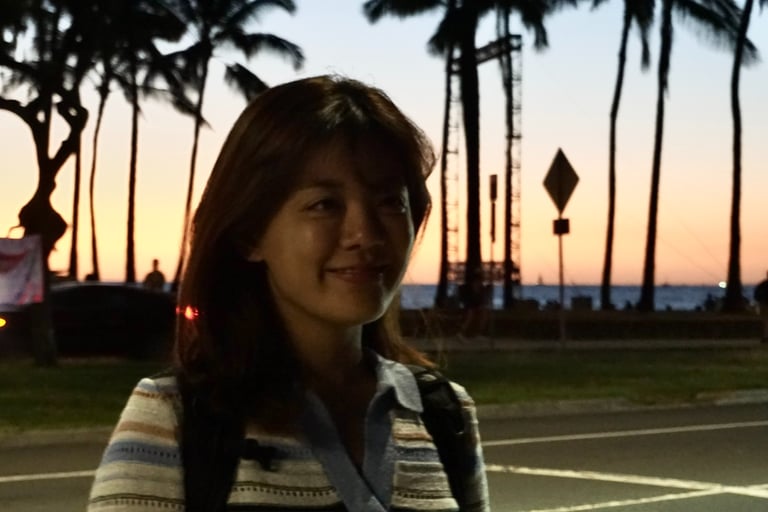
I’m Minah Kang — a scholar of international relations, security studies, postcolonial studies, and political geography, based in Baltimore.
I’m currently a PhD candidate in Political Science at Johns Hopkins University. My work begins with a question of political scale: what scale of politics truly matters in people’s political lives? Is it the body, the household, the neighborhood, the village, the nation-state—or the planetary? How do individuals imagine, inhabit, and relate to others across different scales—and how do these relations shape our political being?
In my dissertation, I take up the region as a scale that sits between the nation-state and the global, with the Asia/Pacific region as primary site of inquiry. I approach the region as a contested and generative site where imperial histories sediment and futures contend.
Based on multilingual archival research across Korea, Japan, the Philippines, and the U.S., my work traces how regional forms endured beyond the formal end of empire—reanimating imperial logics while opening claims for connection, justice, and alternative visions of political belonging.
I’m particularly interested in how the region has functioned as a conduit for postwar hegemonic ordering: first, through epistemic frameworks that staged the region as a scale of comparison, expertise and political futurity in response to global disorder; and second, through infrastructural regimes of (im)mobility that layered postwar settlements—such as repatriation systems and military base networks—onto infrastructures originally built for war and empire across the region. At the same time, my research examines how regional space enabled precarious yet persistent reparative claims and political imagination against militarized sexual violence—claims that exceeded the normative horizons of nationalism and cosmopolitan globalization.
Together, the project situates regionalism and globalization within longer histories of empire and war. It demonstrates how the spatial logics of the liberal international order, first forged in the interwar period, were continuously reconfigured through postwar settlements and the Cold War, ultimately shaping contemporary regionalist frameworks.
Welcome, and thanks for stopping by.
© 2025. Minah Kang. All rights reserved.